
Vitamin C, Decoded
The most-loved brightening antioxidant in skincare, and the most misunderstood. Here's what it really does, why the form matters, and how we formulated ours to stay powerful to the last drop.

Ingredient passport
Vitamin C
- Type
- Antioxidant · Brightener
- Known for
- Glow, even tone, collagen support
- Best time
- AM, PM or both
- Best friend
- Daily SPF
- Find it in
- Vitamin C Serum · 17% multi-form
In this article
The 60-second version
- Vitamin C does three jobs: it defends against free radicals, brightens the look of dark spots and supports collagen.
- Pure Vitamin C is powerful but unstable. Light and air make it oxidize which causes the formula to become less potent and turn brown.
- Using several forms, both water- and oil-soluble, woks with the skin through multiple pathways.
- Apply to dry skin, wait 2 minutes, and always finish your morning with SPF.
01 · The science, simply
Why your skin loves Vitamin C
Vitamin C (ascorbic acid) is one of skin's own antioxidants, but UV, pollution and time deplete it. Applied topically, it goes to work in three ways at once, which is why it's earned its place as a morning essential.
Defends
Neutralizes free radicals created by UV and pollution before they can damage skin and trigger dullness.
Brightens
Helps interrupt tyrosinase, the enzyme that starts melanin production, for a visibly brighter, more even tone.
Supports
Skin needs Vitamin C to make collagen, the protein that keeps it looking firm and smooth.
02 · Not all Vitamin C is equal
Why the form matters
"Vitamin C" on a label can mean very different molecules. Each has its own trade-off between potency, stability and how it travels into skin. Our Vitamin C Serum uses four of them, 17% combined, so skin gets the benefits of each. Tap to explore.
Ascorbic Acid
Also called L-ascorbic acid, "pure" Vitamin C
The most studied and most potent form. The catch: it's notoriously fragile and breaks down with light, air and heat. In our serum, a gold-based sub-microparticle carrier helps stabilize pure Vitamin C and support sustained delivery over time.
Ascorbyl Glucoside
Vitamin C bound to glucose
A stable, gentle form. Once on skin, natural enzymes gradually release the Vitamin C, so the benefit comes steadily rather than all at once. That makes it a great partner for more sensitive skin.
3-Glyceryl Ascorbate
Vitamin C bound to glycerin
A stabilized derivative paired with glycerin, a well-known humectant. It brings brightening support with a comfortable, hydrating feel, which is part of why our serum doesn't feel tight or stripping.
Tetrahexyldecyl Ascorbate
The oil-soluble form
Your skin's outer barrier is made of lipids, so an oil-soluble Vitamin C travels through it differently from water-soluble forms. It's very stable and complements the other three for a multi-pathway approach.
From our founder
How we built it: 4 forms of Vitamin C
"I built this for the person who just wants Vitamin C that actually works, stays stable, and doesn't quit halfway through the bottle." Over 3 years in the making.
Dimitri James, SKINN Founder
03 · The catch
The oxidation problem
Ever had a Vitamin C serum turn darker and darker, then brown, halfway through the bottle?
That's oxidation: light and air break Vitamin C down, and a darkened serum has lost much of its power.
Our formula lives in airless, light-protective packaging that helps protect it from exposure, so you get the same potency from the first pump to the last.

SKINN Vitamin C
Stays golden to the last drop

Typical Vitamin C
Darkens with light and air
How to check any Vitamin C: Most Vitamin C serums start clear or pale yellow, so turning deep orange or brown means they've oxidized. Ours is golden by design and made to stay that shade to the last drop. The warning sign is a color change, not the color itself.
04 · Inside our formula
The supporting cast
Dark spots form through more than one pathway, so one ingredient isn't enough. Our 22% Brightening Complex surrounds Vitamin C with complementary actives. Tap a card to learn its role.
Niacinamide
The tone-evening multitasker
A proven brightening multitasker that helps visibly improve uneven tone and the appearance of discoloration. It's highly effective and barrier-friendly for sensitive skin.
Tranexamic Acid
For stubborn discoloration
One of skincare's most talked-about brighteners. It helps calm the signals that tell skin to overproduce pigment, so it targets the look of dark spots from a different angle than Vitamin C.
Kojic Acid
A classic spot-targeter
Originally derived from fermentation, kojic acid is a long-standing brightening active that helps address the look of dark spots and uneven tone.
Glutathione
The "master antioxidant"
An antioxidant your body makes naturally. In skincare it complements Vitamin C's defense and adds to the brightening blend for a more radiant-looking complexion.
Sodium Hyaluronate
A form of hyaluronic acid
Draws water into skin for a plumper, smoother feel. Hydrated skin reflects light better, which is part of that "glow".
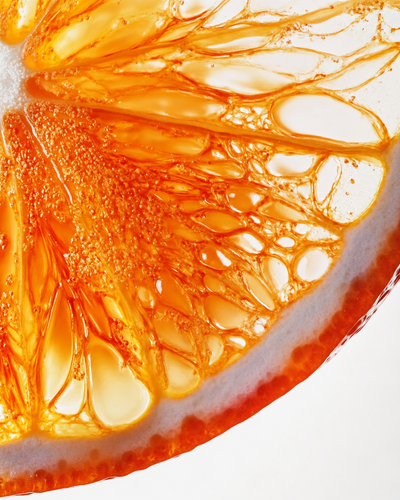
Orange Peel Oil
Plus Vitamin E & honey
That light, fresh citrus scent is naturally derived from orange peel oil. Vitamin E (tocopheryl acetate) and honey round out the nourishing feel.

Vitamin C Serum
with 22% Brightening Complex
- 17% multi-form Vitamin C, gold-stabilized
- 5% niacinamide + tranexamic acid, kojic acid, glutathione
- Airless, light-protective pump
SKINN 30-Day Promise: if you don't see a visible difference, we'll refund you.
05 · Layering guide
Can I mix it?
Pick what's already in your routine to see how it plays with Vitamin C.
✓ Best friends
Vitamin C + SPF
The ultimate morning duo. Sunscreen blocks UV, and Vitamin C helps neutralize the free radicals that get through. Apply Vitamin C first, wait 2 minutes, then moisturizer and SPF.
✓ Great together
Vitamin C + Niacinamide
The old "don't mix them" rule is outdated. They target tone from different angles, which is exactly why our serum pairs 17% Vitamin C with 5% niacinamide.
✓ Great together
Vitamin C + Hyaluronic acid
Hydration and brightening go hand in hand. Our serum already includes sodium hyaluronate, and you can layer a hydrating serum or moisturizer after the 2-minute dry-down.
✓ Great together
Vitamin C + Peptides
A smart anti-aging pairing: Vitamin C for tone and collagen support, peptides for a smoother, firmer look. Apply Vitamin C first, then your peptide serum or cream.
✓ Great together
Vitamin C + Facial oil
Our founder's favorite glow move: follow your Vitamin C with Luminous Facial Oil once the full 2-minute dry-down is complete. It locks in that dewy finish.
◐ Use at different times
Vitamin C + Retinol
Both are powerful actives, and layering them together can be a lot for many skin types. The easy fix: Vitamin C in the morning, retinol at night.
◐ Alternate if you're sensitive
Vitamin C + Exfoliating acids
Glycolic, lactic and salicylic acids can boost glow, but combined with Vitamin C they may irritate sensitive skin. Use them on alternate nights or at a different time of day.
✕ Keep them apart
Vitamin C + Benzoyl peroxide
Benzoyl peroxide is an oxidizer, so it can break Vitamin C down before it can work. Use them at opposite ends of the day.
06 · Get the most from it
How to use it
- Cleanse & dry Vitamin C absorbs best on a bare face. Make sure skin is fully dry, not just damp.
- Apply two pumps Smooth across face and neck, avoiding the eye area.
- The 2-minute rule Let it fully absorb before layering. This prevents pilling and gives the serum time to sink in. Finish your AM routine with SPF.
Try the 2-minute rule
Apply your serum, then tap start.
Pro tip from Dimitri, our founder
If you're new to concentrated Vitamin C, start every other day and gradually increase frequency as your skin becomes accustomed to the formula.
★★★★★
"I have tried many different Vitamin C serums in the past and have always had mixed feelings towards them until I tried this one."
★★★★★
"No weird Vitamin C smell, and it doesn't turn dark like other serums I've tried. This one is staying in my routine!"
★★★★★
"I notice that the serum takes a little bit of time to dry but it's worth the wait. its almost like putting a real treatment on my face everyday."
07 · Your questions
Frequently asked
Is Vitamin C better in the morning or at night?
Both! In the morning, Vitamin C provides antioxidant support against environmental stressors while helping skin look brighter and more radiant. At night, it complements your evening routine to support visibly brighter, more even-looking skin. Use it AM, PM or both.
Does Vitamin C make skin more sensitive to the sun?
Vitamin C isn't known for increasing sun sensitivity the way some exfoliating acids and retinoids can. It actually complements your sun protection. You still need SPF every morning, because Vitamin C doesn't replace sunscreen.
What does the SKINN Vitamin C Serum feel like?
The serum has a cushiony, velvety texture with a soft, grippy feel that hugs the skin like a second-skin veil. It glides on smoothly and leaves skin feeling silky, smooth and hydrated, with a refined finish.
Why wait the full 2 minutes before my next product?
Allowing the full 2 minutes gives the serum time to fully absorb and dry into the skin, which helps it work as intended and creates a smooth base for the rest of your routine. It also helps minimize pilling when you layer more skincare.
Is there a scent?
Yes, a light citrus scent naturally derived from orange peel oil.
Can I use Vitamin C if I have sensitive skin?
Many people with sensitive skin use Vitamin C happily. Stable, gentler forms like ascorbyl glucoside help. Patch test first, start every other day, and build up as your skin adjusts.
Keep learning
Continue with the SKINN Journal

Vitamin C Serum
$52.15$74.50