
Hyperpigmentation & Brightening 101
Why dark spots appear, why they hang around, and the simple, consistent routine that helps skin look clearer, brighter and more even. No jargon, just what actually works.

Good to know
Hyperpigmentation is one of the most common skin concerns. It's harmless, and it's very treatable with patience.
In this article
The 60-second version
- Hyperpigmentation is extra melanin that collects in one spot. Sun, breakouts and hormones are the usual triggers.
- Daily broad-spectrum SPF is non-negotiable. Without it, even the best serum is fighting a losing battle.
- Brighteners like Vitamin C, niacinamide and tranexamic acid work best together, because pigment forms through more than one pathway.
- Be patient and consistent. Glow shows up first, and spots fade gradually over weeks as skin renews.
01 · The basics
What hyperpigmentation actually is
Your skin color comes from melanin, a pigment made by cells called melanocytes that sit at the base of the outer layer of skin. Melanin is protective: it's your skin's built-in way of shielding itself from UV light.
Hyperpigmentation happens when melanocytes get overstimulated and produce more melanin than they should in one area. That extra pigment clusters together and shows up on the surface as a dark spot, a patch or freckle-looking uneven skin tone.
1. Something flips the switch
UV exposure is the biggest trigger. Inflammation from a breakout, irritation or picking, and hormonal shifts can also signal melanocytes to ramp up.
2. Melanin goes into overdrive
An enzyme called tyrosinase kicks off melanin production. The melanocyte then passes those pigment packets up to the surrounding skin cells.
3. A spot you can see
The pigment clusters and travels up toward the surface as skin renews. That's why fading takes time: the spot lifts away layer by layer.
~4 wks
Roughly how long a full skin-renewal cycle takes in your twenties. It gets slower with age.
Up to 80%
Of the sun's UV rays can pass through clouds. Overcast days still count.
1 habit
Makes the biggest difference: daily SPF. It protects every bit of progress you make.
02 · Identify it
Spot your type
Not all discoloration is the same. Tap each type to see what it looks like, why it happens and what helps.
Sun spots & age spots
Also called solar lentigines, liver spots
- Looks like
- Flat, tan to brown spots with defined edges, on the cheeks, forehead, hands and chest.
- Why it happens
- Years of cumulative sun exposure. They often show up from your thirties onward, which is why they read as "age".
- What helps
- Daily SPF plus antioxidant brighteners like Vitamin C, which helps interrupt the pigment process and defend against UV-driven free radicals.
- Good to know
- These respond well to consistent care, but they return quickly without sun protection.
Post-blemish marks
Post-inflammatory hyperpigmentation (PIH)
- Looks like
- Pink, red, brown or dark marks left behind where a breakout, bite, scratch or irritation used to be.
- Why it happens
- Inflammation tells melanocytes to produce extra pigment as part of the healing response. It's more common and longer-lasting in deeper skin tones.
- What helps
- Hands off: picking makes it worse. Calm, barrier-friendly brighteners like niacinamide and Vitamin C, plus SPF so the marks don't darken.
- Good to know
- It's not a scar. The skin's texture is intact, and the color fades as skin renews.
Melasma
Sometimes called the "mask of pregnancy"
- Looks like
- Larger, blotchy brown or gray-brown patches, often symmetrical on the cheeks, upper lip and forehead.
- Why it happens
- A mix of hormones (pregnancy, menopause), sun, heat and genetics. It's more common in women.
- What helps
- Strict, daily sun protection and gentle, consistent brightening. Avoid harsh scrubs, which can inflame skin and make patches darker.
- Good to know
- Melasma is stubborn and can come back. If you think you have it, a dermatologist can confirm and build a plan with you.
Freckle-like spots & uneven tone
Those scattered little spots that make skin look patchy
- Looks like
- Clusters of small, flat, light-brown dots across the cheeks, nose and forehead, often with patchy areas that make skin tone look uneven rather than one even color.
- Why it happens
- Sun exposure tells pigment cells to make more melanin in small, scattered areas. Spots that were barely there in your twenties can multiply and darken over the years, especially after summer.
- What helps
- Daily SPF to stop them deepening, plus brighteners like Vitamin C and niacinamide to help soften the look of scattered spots and even out overall tone.
- Good to know
- As our founder puts it, it's often tone, not wrinkles, that makes skin look older. True freckles you were born with are genetic and harmless; brighteners work on the look of sun-driven spots and overall evenness.
"It's not your wrinkles giving away your age, it's your tone. Dark spots. Dullness. Sun damage stacked up over years."
03 · Clear it up
Myth vs. fact
Tap a card to flip it.
"Scrubbing harder will fade my spots faster."
Aggressive scrubbing irritates skin, and irritation is inflammation, which can trigger more pigment. Gentle and consistent wins.
"I only need SPF when it's sunny."
UV reaches your skin on cloudy days and through windows. Daily broad-spectrum SPF 30+ keeps new spots from forming and old ones from darkening.
"Vitamin C and niacinamide cancel each other out."
That's an outdated idea. In a well-formulated product they're a power pair that targets tone from different angles. Our Vitamin C Serum pairs 17% Vitamin C with 5% niacinamide.
"If a product works, I'll see it in a few days."
Radiance can improve quickly, but pigment lifts out as skin renews, which takes weeks. Give a routine at least one full bottle before you judge it.
04 · What works
The brightening toolkit
Dark spots form through more than one pathway, so the most effective routines use ingredients that work on different steps of the pigment process, plus a shield to stop new spots forming.
Brightens + defends
Vitamin C
An antioxidant that helps interrupt melanin production and defends against the free radicals UV creates. It also supports collagen.
Evens tone
Niacinamide
Vitamin B3. It helps limit how much pigment reaches the surface and is gentle and barrier-friendly, even for sensitive skin.
Targets stubborn spots
Tranexamic acid
A newer favorite for stubborn discoloration. It helps calm the signals that tell skin to overproduce pigment.
Supporting brighteners
Kojic acid & glutathione
Complementary actives that help address the look of dark spots from additional angles for a more even-looking tone.
The shield
Broad-spectrum SPF 30+
Every morning, as the last step of your routine. Reapply when you're outdoors. Brighteners fade spots; sunscreen keeps them from coming back.

Vitamin C Serum
with 22% Brightening Complex
17% multi-form Vitamin C, 5% niacinamide, tranexamic acid, kojic acid and glutathione in one cushiony serum. It targets age spots, hyperpigmentation and discoloration to visibly even skin tone.
SKINN 30-Day Promise: if you don't see a visible difference, we'll refund you.
07 · Real results
See the difference
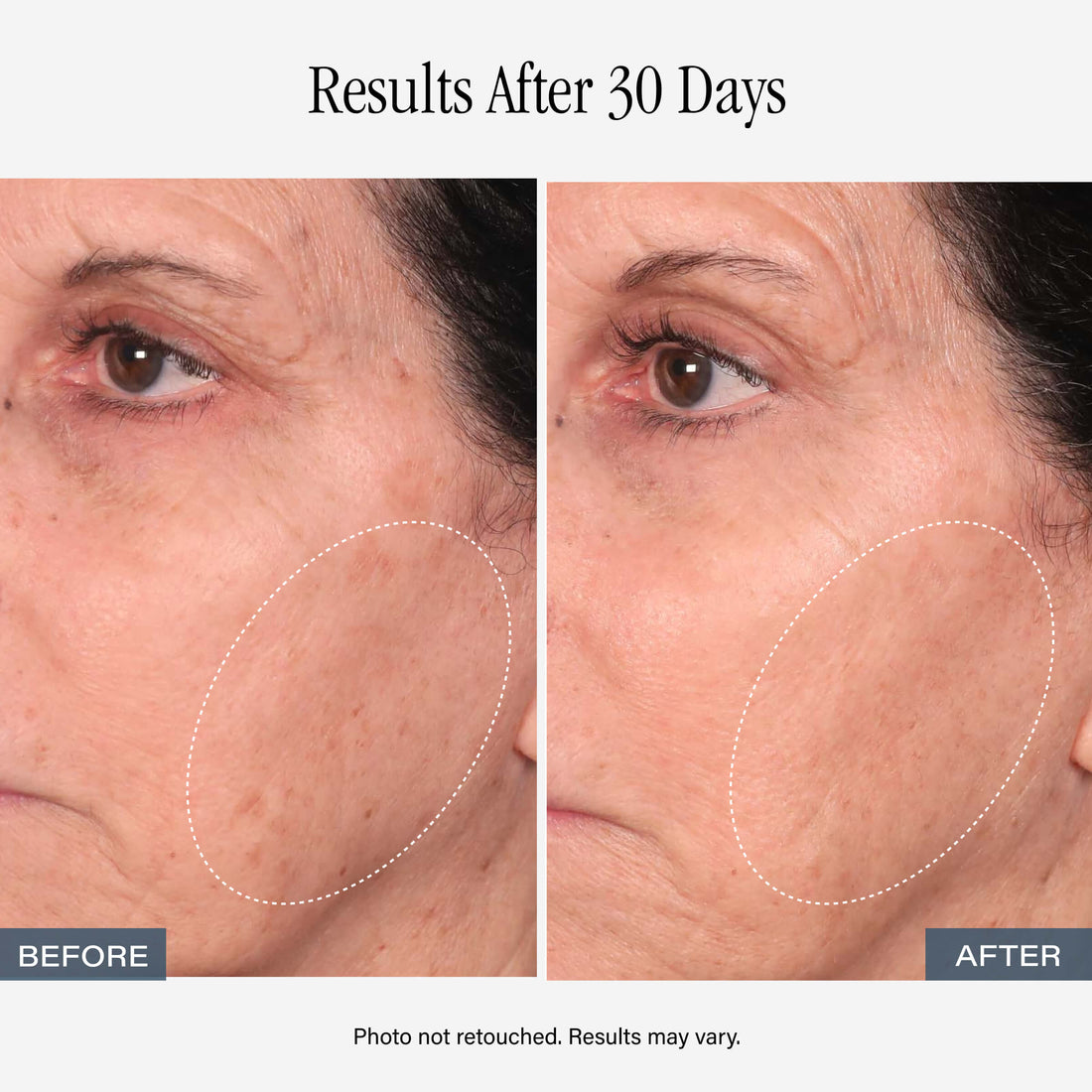
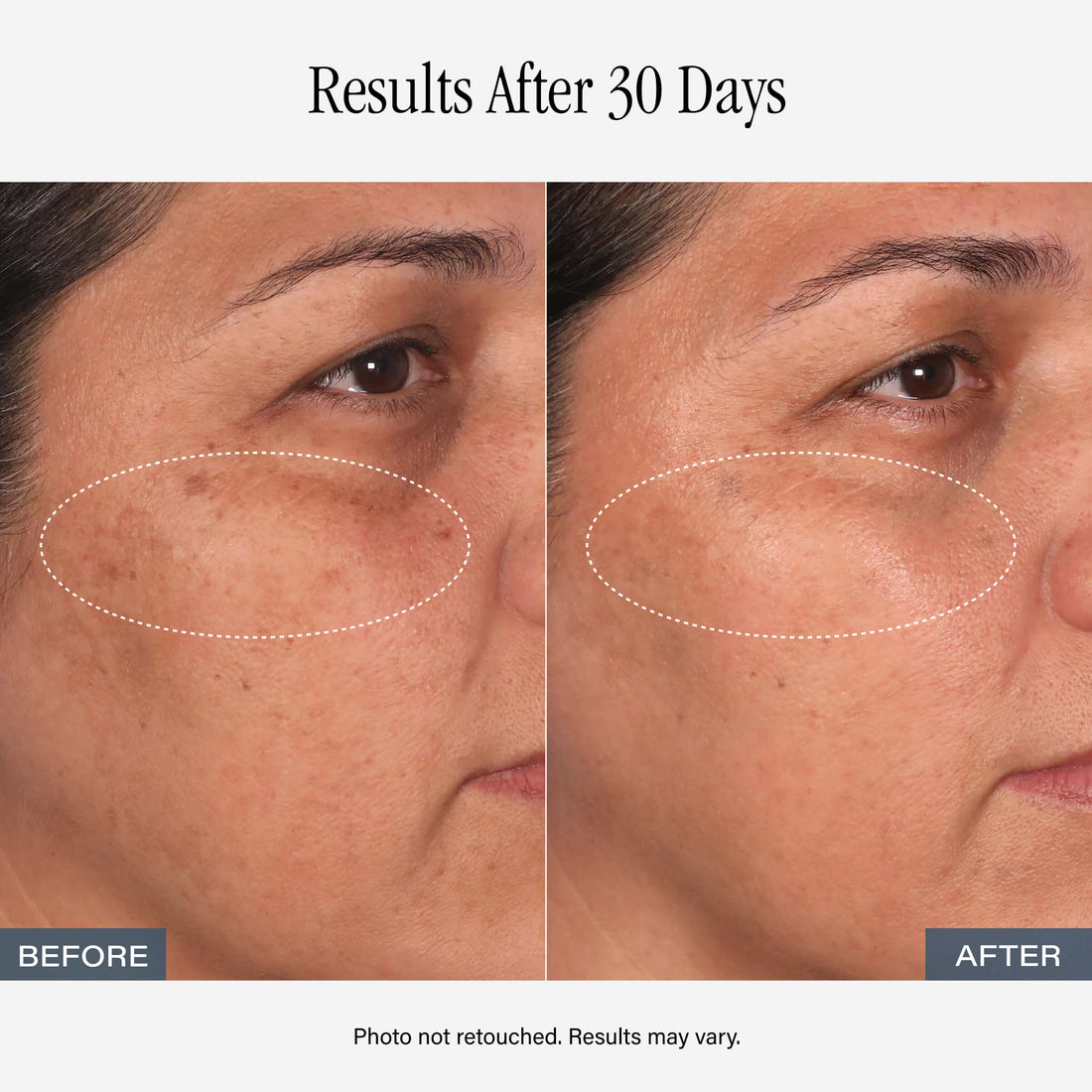
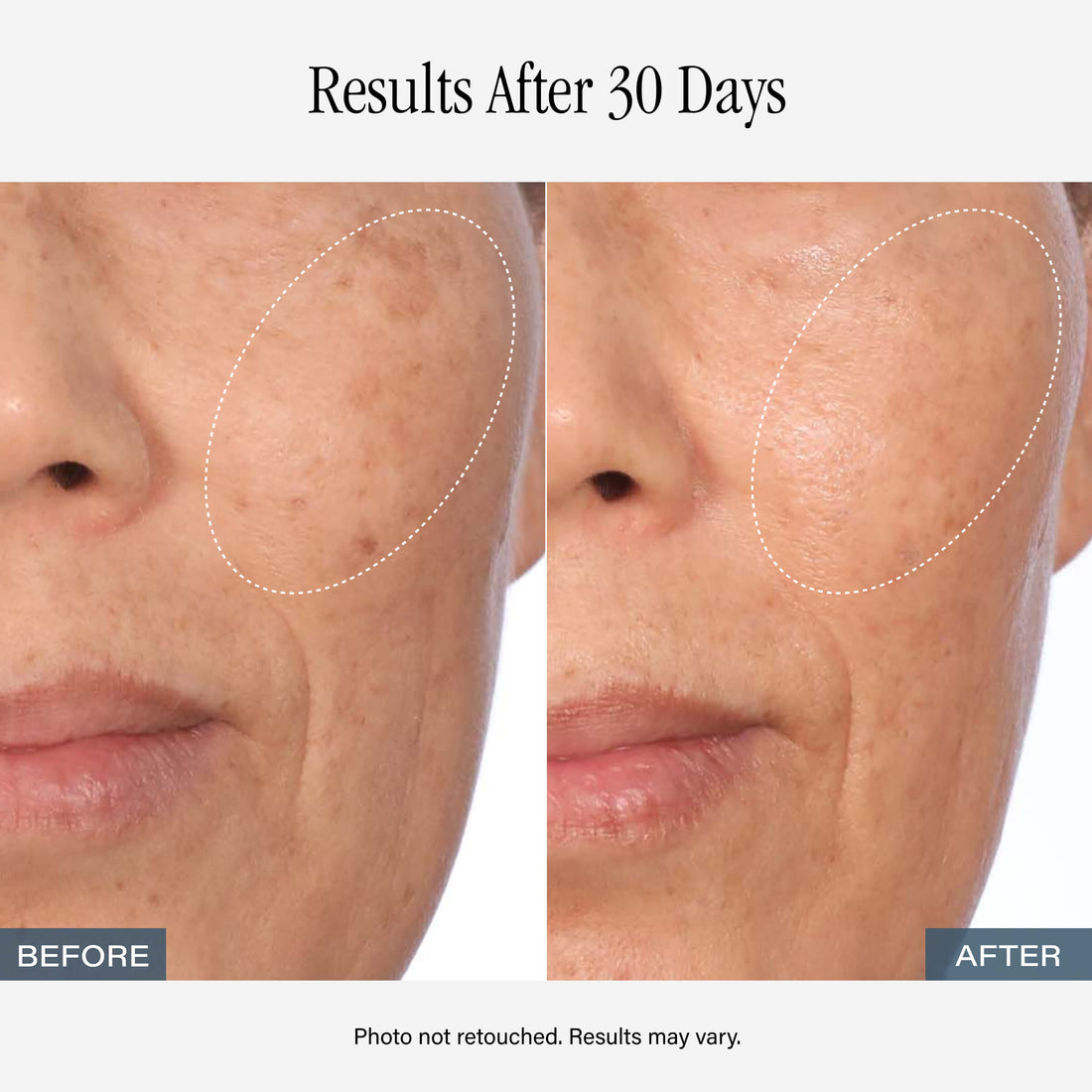
SKINN Vitamin C Serum. Results may vary.
05 · Put it together
Your brightening routine
Four steps in the morning, three at night. Simple enough to do every single day, which is the whole point.
- Cleanse A gentle cleanser, then pat skin completely dry. Vitamin C absorbs best on a bare, dry face.
- Treat with Vitamin C Two pumps across face and neck, avoiding the eye area. Then follow the 2-minute rule: let it fully absorb before the next step so nothing pills.
- Moisturize Hydrated skin reflects light better and looks more radiant.
- SPF 30+, every day Vitamin C and sunscreen are a team: the antioxidant boosts your defense, and the SPF blocks the trigger.
- Cleanse Remove SPF, makeup and the day's buildup. Double-cleanse if you wear heavy sunscreen.
- Vitamin C, again (optional) Our Vitamin C Serum works AM, PM or both. New to concentrated Vitamin C? Start every other day and build up.
- Nourish & seal Finish with your moisturizer. For extra glow, our founder likes Luminous Facial Oil once the 2-minute dry-down is complete.
Pro tip from Dimitri, our founder
If you're new to concentrated Vitamin C, start every other day and gradually increase frequency as your skin becomes accustomed to the formula.
06 · Be patient
What to expect, week by week
-
Weeks 1–2
Glow comes first
Skin can look fresher and more radiant as antioxidants go to work and hydration improves.
-
Around week 4 · one bottle
Visibly brighter skin
One bottle of our Vitamin C Serum is about 30 days of use: brighter, more radiant-looking skin, with spots starting to soften.
-
Weeks 8–12
Tone looks more even
With daily SPF, dark spots continue to look lighter as skin renews through several cycles.
-
Ongoing
Protect your progress
Keep up SPF and your brightening step. Pigment responds to triggers for life, so consistency keeps results.
Everyone's skin is different. Results may vary.
★★★★★
"I have been looking to reduce some hyperpigmentation/sun damage on my cheeks that has been bothering me for years and THIS DOES IT!"
★★★★★
"My skin looks noticeably brighter, and I've already seen such a difference in the appearance of my dark spots."
★★★★★
"I have a fairly simple skincare routine and added this in recently and have seen my skin become so much brighter."
When to check in with a dermatologist
See a professional if a spot changes in size, shape or color, has uneven borders, bleeds or itches, or appears suddenly. Also book a visit if you suspect melasma. Skincare is for cosmetic concerns, and a dermatologist should check anything that looks new or different.
08 · Your questions
Frequently asked
Can hyperpigmentation go away on its own?
Some marks, especially post-blemish marks, can fade over months. Without sun protection, though, spots often linger or darken. A consistent brightening routine plus daily SPF helps speed things along.
How long until I see results?
Radiance often improves first. With our Vitamin C Serum, you can see brighter, more radiant-looking skin in about 30 days, or one bottle. Deeper or older spots take longer, typically a few skin-renewal cycles. Results may vary.
Is Vitamin C better in the morning or at night?
Both! In the morning, Vitamin C provides antioxidant support against environmental stressors while helping skin look brighter. At night it complements your evening routine. Use it AM, PM or both.
I have sensitive skin. Can I still brighten?
Yes. Choose barrier-friendly brighteners like niacinamide, avoid harsh scrubs, and introduce new actives slowly. Start every other day, and patch test first.
Why do my spots come back?
The melanocytes in that area are primed to respond to triggers, especially UV. That's why SPF and a maintenance brightening step matter even after spots fade.


Vitamin C Serum
$74.50